The difference between soft washing and pressure washing can be reduced to a simple rule of thumb: hard surfaces that will stand up to it get the pressure washer, but you want to be soft on anything delicate or with organic growth. In an Australian home that typically leaves roofs, render, weatherboard and any moss, lichen, algae or mould to the soft wash, while a concrete driveway or some brickwork is put under pressure.
On paper, a soft washing vs pressure washing comparison for your home is straightforward enough. But homeowners have been known to come unstuck over it. I am Harper Wainwright and around Queensland I see it all too often: people will put the pressure on first and make enquiries afterwards. You could use a road train to put a loaf of bread in the boot, but one would not call it sensible.
To put it briefly, soft washing is the more enduring and safer bet for most of the exterior as it gets at the growth that is staining the surface, not just the stain. For those unsure about timing, our seasonal exterior pressure cleaning guide can be quite illuminating. There is room for pressure washing on a stubborn grime covered driveway or paver, but you run a greater risk of damage should the PSI, flow rate or nozzle be amiss.
A word to the homeowner
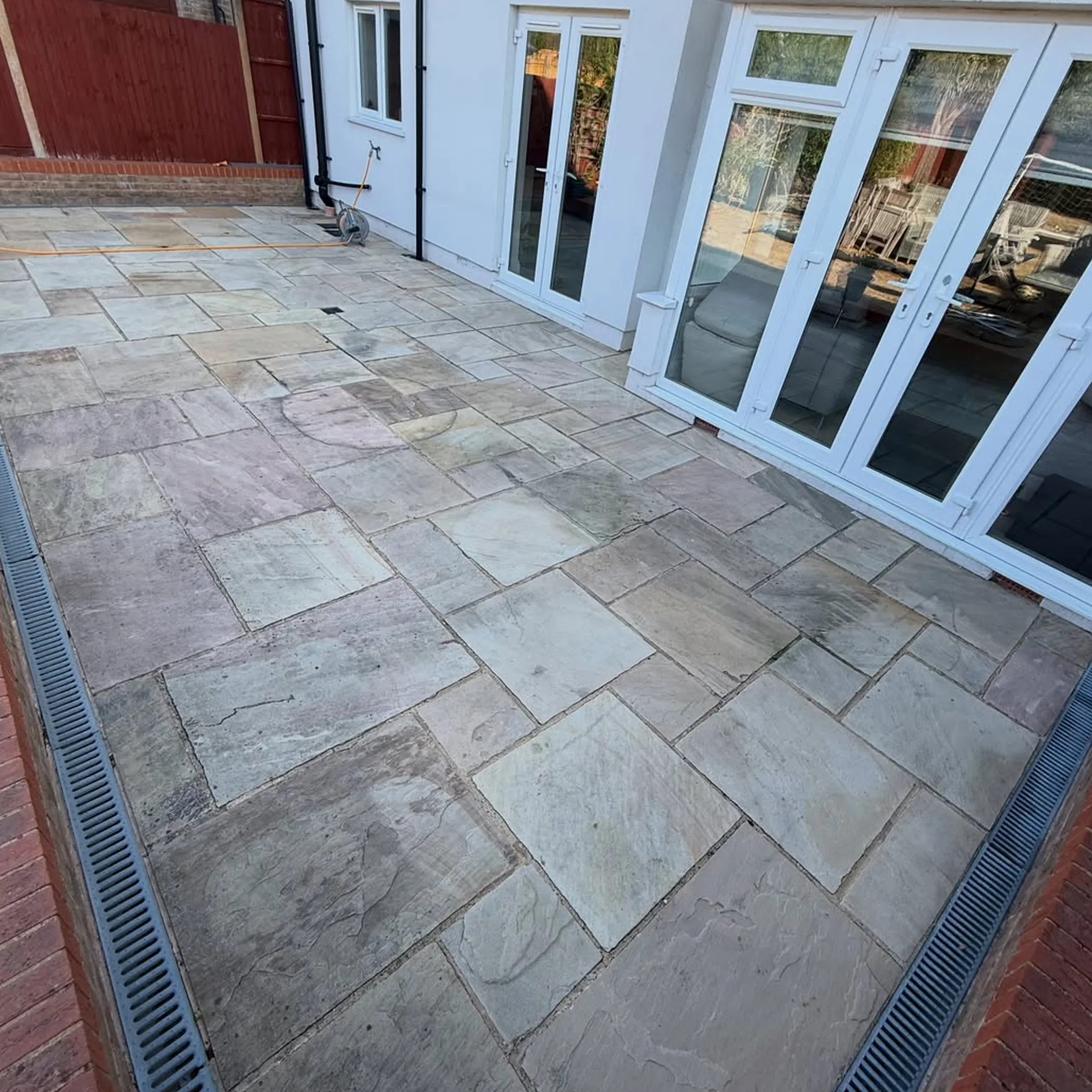
Black spots on the roof, a green film to the walls, slippery paths when the weather has been wet or mould in the eaves of a shaded area are all best dealt with by soft washing. It will apply cleaning agents at low pressure to put an end to the growth rather than make a pancake of the surface.
Then there are the oil marks on concrete, compacted dirt or old grime on hard pavers where a pressure washer is called for. One has to know where to draw the line; what is fine on the driveway can do a number on your render or send water to places it ought not to be.
Who should be reading this
Any Australian homeowner with a mind to DIY or engage a pro will find this guide of use, particularly those with Colorbond, terracotta, solar panels, rendered or weatherboard walls and concrete. If you have done a search for “soft wash vs pressure wash australia” or to “hire a soft washer near me”, you will want to have some questions ready before a man in a trailer shows up with a pitch.
The mechanics of soft washing
You could say soft washing is chemistry doing the work, not brute force. With water applied at a lower pressure than the norm and a mix to deal with the biological like mould and lichen, it is a method I would put forward as the practical one. It may seem slower to start with but is wiser in the end; it allows the treatment to break down the grime and nip regrowth in the bud without scarring the finish, giving you something that will last.
Chemicals and the like
What you will find in the soft wash chemicals for an Australian exterior is usually a blend of sodium hypochlorite, water and perhaps a surfactant or detergent, or a biodegradable option from some contractors. Sodium hypochlorite is a chlorine product of sorts, bleach if you like, but the rinse, dwell time and ratio of the mix are of consequence.
We keep the pressure low on walls and roofs. No point in cutting into the pointing or paint. The idea is to put an even coat of solution on so the growth perishes and the elements can take care of the residue.
It is well suited to roof work in Australia, say on a painted or Colorbond roof, eaves, gutters and certain tiles where you do not want to dislodge the mortar. Rendered walls, acrylic or otherwise, are also a good candidate as they can be etched by a more aggressive approach.
Do not be fooled into thinking you will have instant perfection. In a head to head, the pressure washer will strip the grime and look better on day one. A soft wash keeps at it, on finer organic stains for instance, and you will see the full effect in the days and weeks to come.
Pressure washing is the brawn of the business
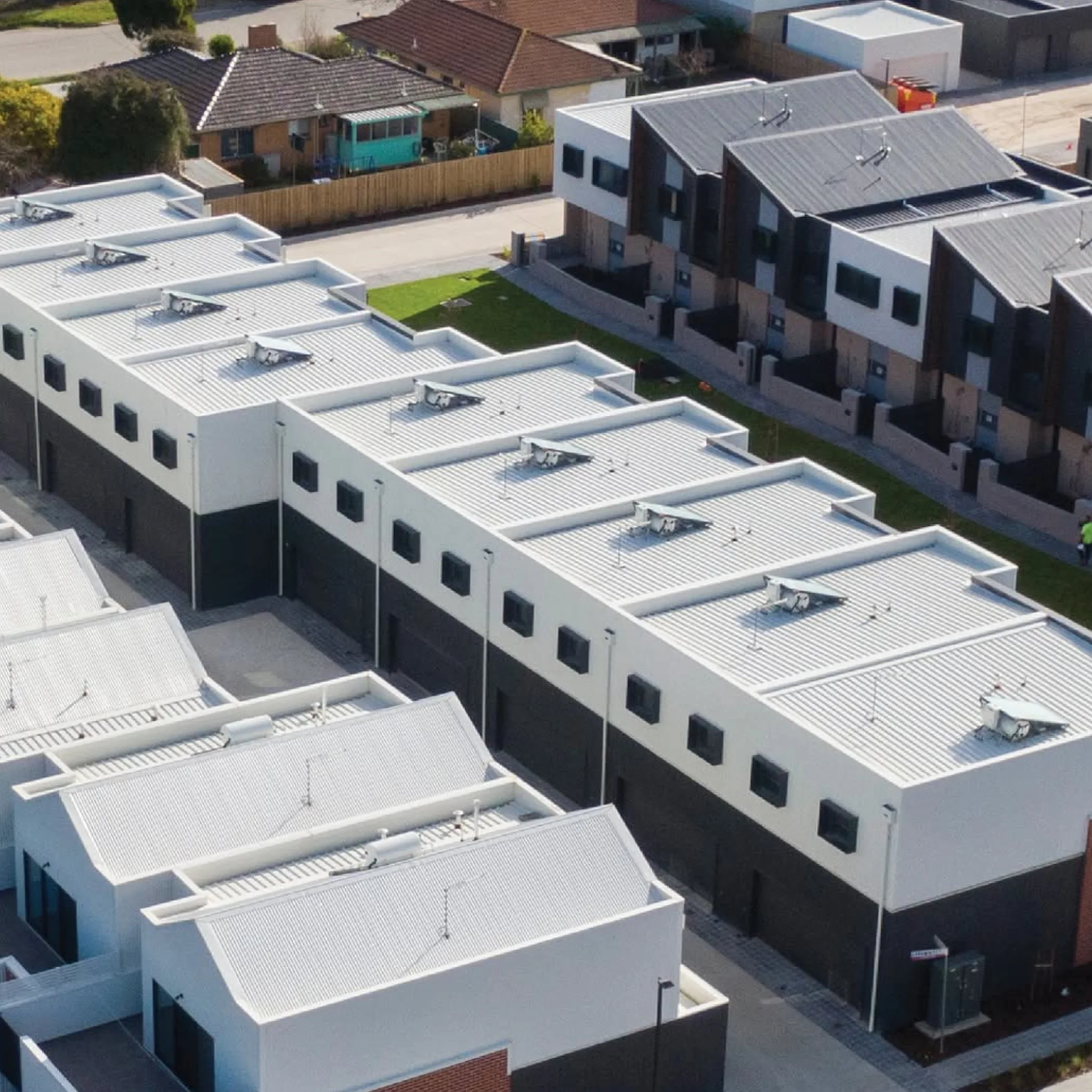
With pressurised water one can put an end to dirt, grime and any loose paint or surface buildup. It is a fine thing on the proper material, but will be as rough as guts if you have the wrong one.
Then there is the matter of equipment. Do not assume all nozzles, settings and machines are created equal; in pressure washing the PSI, flow rate and the impact on the surface will vary considerably between a homeowner’s unit and what a professional has at his disposal.
PSI, Flow Rate And Nozzle Choice
In terms of measurement, PSI is for water pressure and flow rate (litres per minute) tells you how much is being put through the machine. Both are of consequence. Put a high PSI to a timber with an unsuitable nozzle and it will be gouged; do it to Colorbond and the coating comes off, pavers will have sand blasted from them and water is driven into wall cracks or roof cavities.
Those working on hard exteriors will alter the stand-off distance and fan pattern of the nozzle in addition to the machine setting. The cleaning power is not a function of PSI alone as many would have it, but of that combined with the angle of the nozzle, the flow rate and the time spent on any given spot.
When Pressure Is Necessary
Take the driveways of an Australian home for instance. One of the more obvious applications of pressure washing is on concrete, hard brick paths, durable pavers or some exposed aggregate where tyre marks and other ingrained grime are present.
Risks remain however. Apply force to old mortar, brittle surfaces or flaking sealers and they will give way. An area that is already on its way to crumbling is not going to be put right by high pressure, only made to look worse in short order.
Best Method By Surface
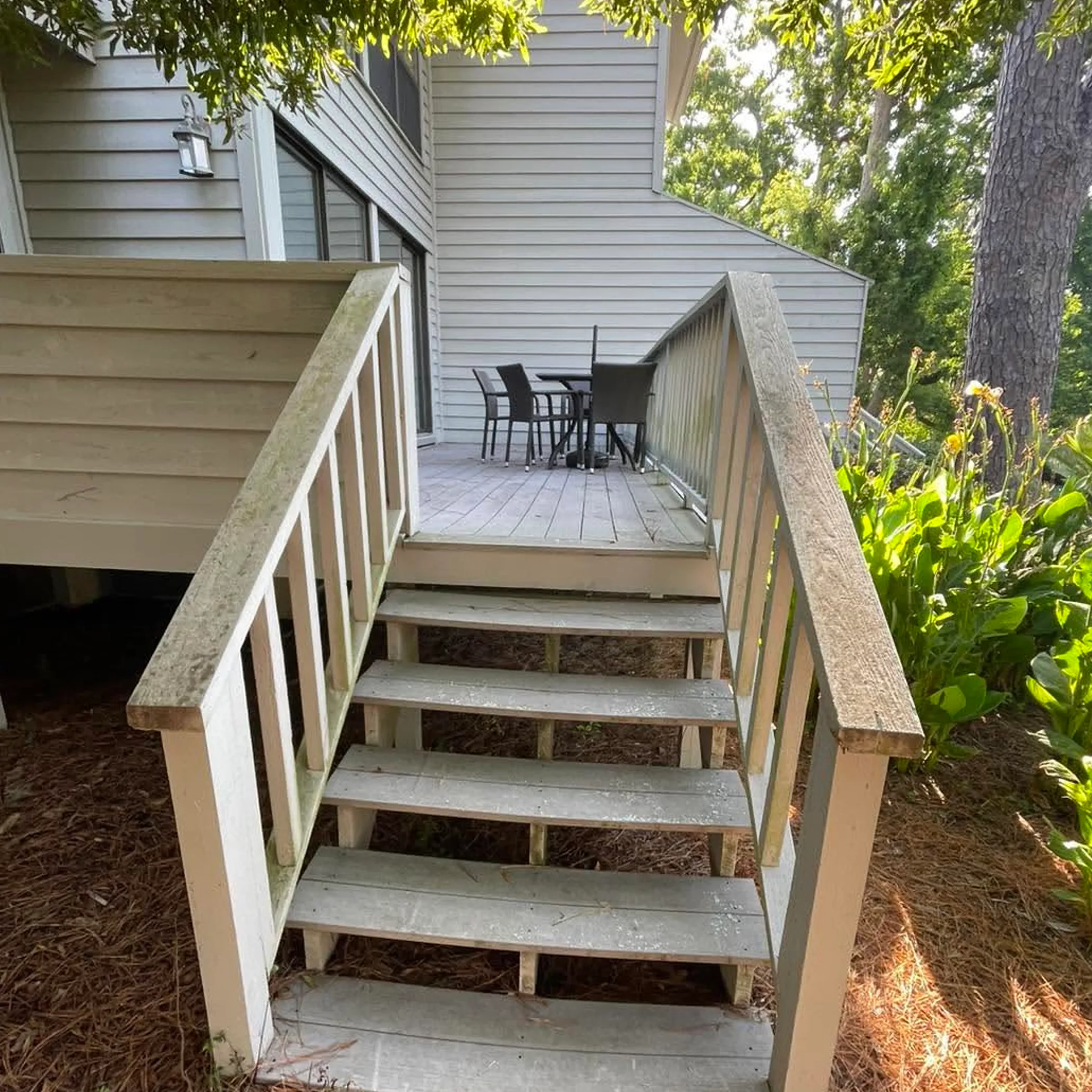
Practicality dictates the approach here. A method that is right for a coastal home in Perth or Sydney may well be for the Sunshine Coast too, though the timing and extent of the buildup will call for different handling after so much sun, salt and stormy weather.
The following is a comparison any homeowner would want to have before determining what to put out to tender and what to leave be.
| Surface | Best Method | Rationale | What happens if you go about it wrong |
| Colorbond roof | Soft wash | Keeps the coating intact and puts down algae or mould | You risk water ingress and a shorter life for the roof |
| Terracotta tiles | Soft wash for the most part | No need for excessive force to deal with lichen and moss | Tile movement, broken pointing |
| Rendered walls | Soft wash | Will see off mould and staining without etching | Streaking, scarring, failure of the paint |
| Weatherboard | Soft wash | Less danger to the joints and paint | Water gets behind the boards, paint is stripped |
| Brick walls | Contingent on condition | Light pressure or soft wash for older mortar | Erosion of the mortar |
| Concrete driveways | Pressure wash | Gets at the embedded traffic marks and grime | Etching should the pressure run too high |
| Concrete pavers | A careful pressure wash | Fine for surface dirt provided the joints are sound | Uneven finish, sand lost from the jointing |
| Solar panels | Low-pressure specialist clean | Glass coatings and seals are left undisturbed | Electrical hazard, damaged seals |
Roofs And Colorbond
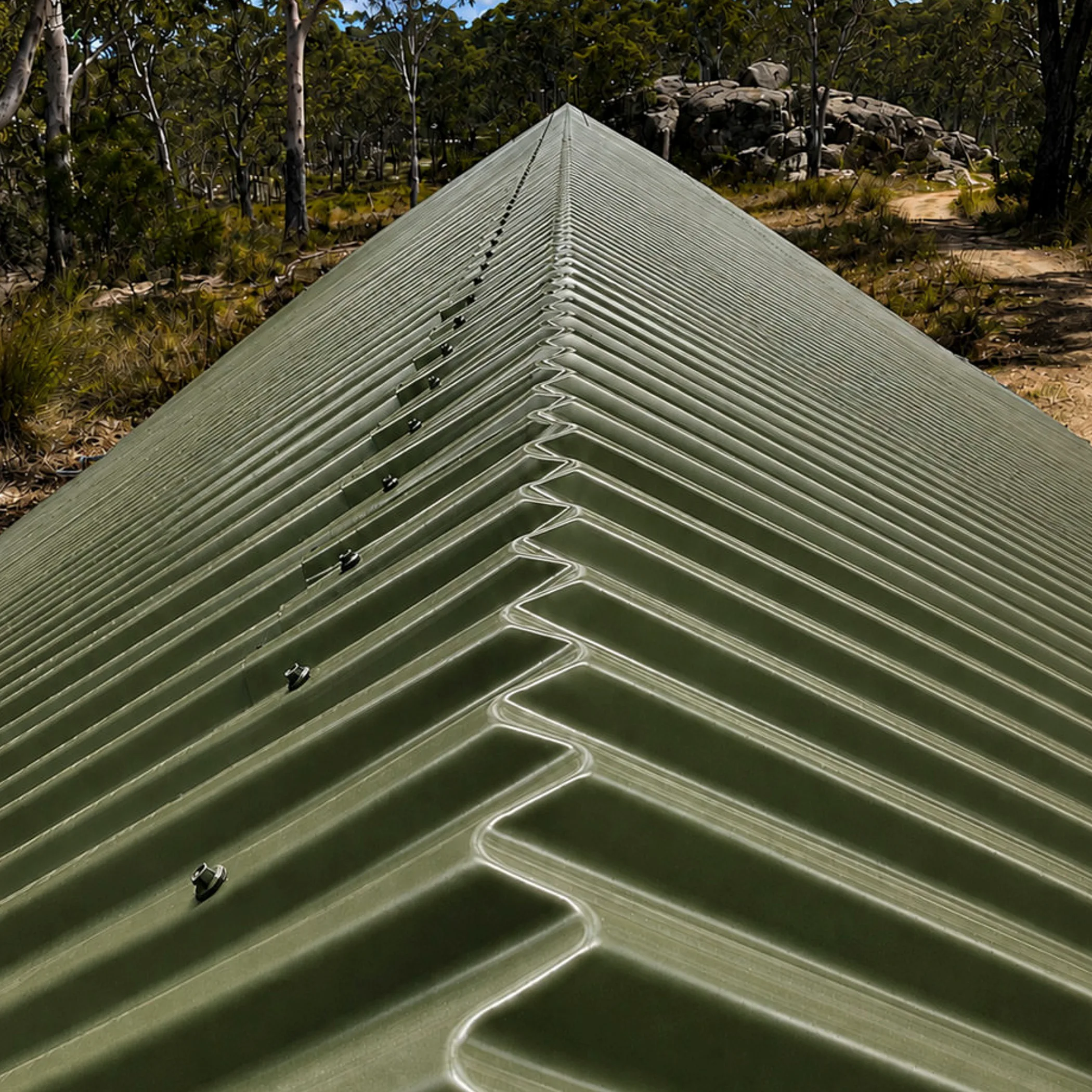
A soft wash is the wiser course for a Colorbond roof. BlueScope roofing is durable on account of the coated finish and a badly applied high-pressure wash at close quarters or over an overlap can harm those protective layers. So unless the manufacturer has a process to the contrary, the choice is soft wash over pressure.
As for soft washing a roof in Australia, the shaded parts tend to have the worst of the mould and algae, and then you have the staining from leaf tannins and salt in the coastal air. A good soft wash will address this and keep the roof from becoming an indoor water feature.
Render, Brick And Weatherboard
High pressure is not the answer for rendered walls, a soft wash is. Render is easily marked and once etched there is no way to make it go away. The same goes for painted weatherboard; get water behind the boards and the trouble will not be apparent till the next week of humidity.
With brick it is something in between. Modern, dense brick with good mortar can stand up to some controlled pressure, but on an older home with weathered joints a softer touch is called for. If the mortar will rub off your hand, the washer is not to be your first resort.
Pavers, Driveways And Paths
There is sense in pressure washing a driveway across Australia since concrete and hard pavers will take it from an operator who knows his job. Where rain has left the place slick with algae, pressure will put the traction back. But do a thorough job on segmental pavers and resanding or resealing can be expected.
There is a certain expectation versus reality to be had. The common view is that the cleaner the blast, the better the workmanship. But an overzealous cleaning can leave a patch with a striped or etched appearance, and pavers will be quick to part with their jointing sand, inviting weeds and movement in time.
Pros, Cons And Longevity
In the end both methods are effective; one has to ask what they put at risk and what they put right. Pressure washing will give you speed and make its mark on hard ground, but soft washing has the edge when it comes to longevity and sparing the surface from damage.
Harper Wainwright would put it simply: biology is the issue? Deal with the biology. Compacted grime on concrete? Then apply pressure with care. You will not find it as costly to mix the two.
A Comparison
- Soft washing
Lower risk of damage and tends to hold back mould and algae for longer. It is the way to go with organic staining, render, weatherboard and roofs, though chemical handling has to be done with some care and dwell time may be needed. - Pressure washing
For hard grime and the like on pavers or durable concrete there is no beating it for a fast, visible result. But misuse can mean water ingress, coating damage or etching.
The longevity of a soft wash is dictated by the surface, rain, humidity, tree cover and climate. Homeowners will often get more control over regrowth than they would from a pressure clean that only strips the top because the organisms have been treated. In drier inland areas regrowth is slower to come back than in a humid coastal zone.
Seasonal Timing
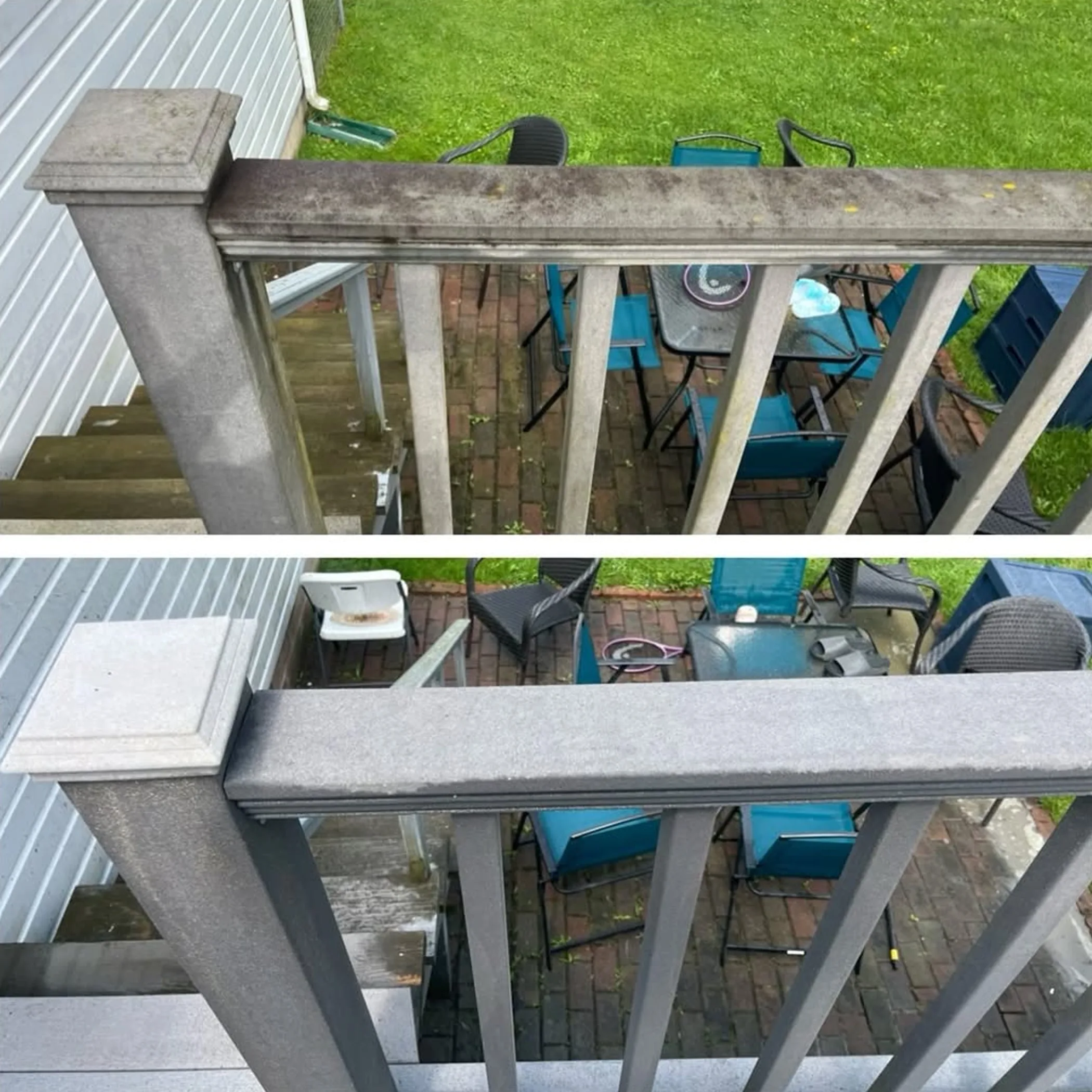
Across Australia one should not understate the importance of when to clean. A wet season sees growth put on quickly and dampness lingers; in the south during winter, moss and mould will persist in the shade. Bushfire season brings ash and soot which is a different proposition altogether.
That makes a seasonal exterior pressure cleaning guide of real use. A roof in Brisbane’s humidity is not the same as one in Adelaide in winter or a Top End build up ahead of storms.
By Climate
Roof and wall cleaning is less of a headache in Queensland and northern NSW in the milder times between the heavy storm runs of the late dry, when a downpour is not going to put paid to the treatment and dwell time is predictable. Up in the tropical north, safety and scheduling are subject to cyclone alerts from November through April.
Further south the moderate temperatures of spring and autumn make for practical exterior washing; in summer a hot surface can see solutions flash-dry and spot, undermining the job.
Before any work is done on a roof or exterior, particularly in regions prone to storms, the Bureau of Meteorology forecasts are where one should look for severe conditions.
How Often
An Australian home does not require to be washed on a constant basis. What dictates the cycle for an exterior wall or roof is the aspect, the moisture, how much tree cover there is and the local environment. An open dry site will not need as much tending as a coastal property or one with shaded walls and bushland nearby.
To get the most out of a day’s work, put your efforts into the dirtiest roof edge on the street, any mouldy walls at the entry and slippery paths. There is no point in trying to do the whole block before lunch when this will give the best return in looks and safety.
Runoff, Safety And Rules
DIYers have a habit of not giving this enough thought. Ladders, electricity, chemicals and a roof are not a good mix. Toss in some solar panels, wet concrete and a measure of overconfidence and it is easy for things to go pear-shaped.
Then there are the environmental rules. Run off from chemicals into a neighbour’s garden or stormwater is an issue, and councils have their own expectations.
On the matter of chemicals
Sodium hypochlorite for a soft wash must be mixed, applied and stored correctly. PPE in the form of gloves, eye protection and respiratory caution is not something to be optional. Poor pre-wetting and rinsing will let overspray get at plants, metalwork and painted furniture.
Should a roof be rinsed after a soft wash? It is not an answer to be left to chance on the day. Some products are meant to be left to dwell and weather away, others are rinsed to deal with residue or overspray. It hinges on the contractor’s process, the product strength and the surface.
Where DIYers err
Underestimating the slip hazard, a lack of runoff control, doing it in the full heat of the day, incorrect mixing of chemicals and putting on too much pressure are the usual errors. Or the classic of directing a pressure lance up under the cladding joins or flashings. You can be sure water will make its way into the one gap you have overlooked.
Then there is roof work, which is no place for a novice. With multi-storey dwellings and their steep inclines, or where you have brittle tiles and any proximity to power lines or solar gear, it is best left to others.
Costs And Engaging Help
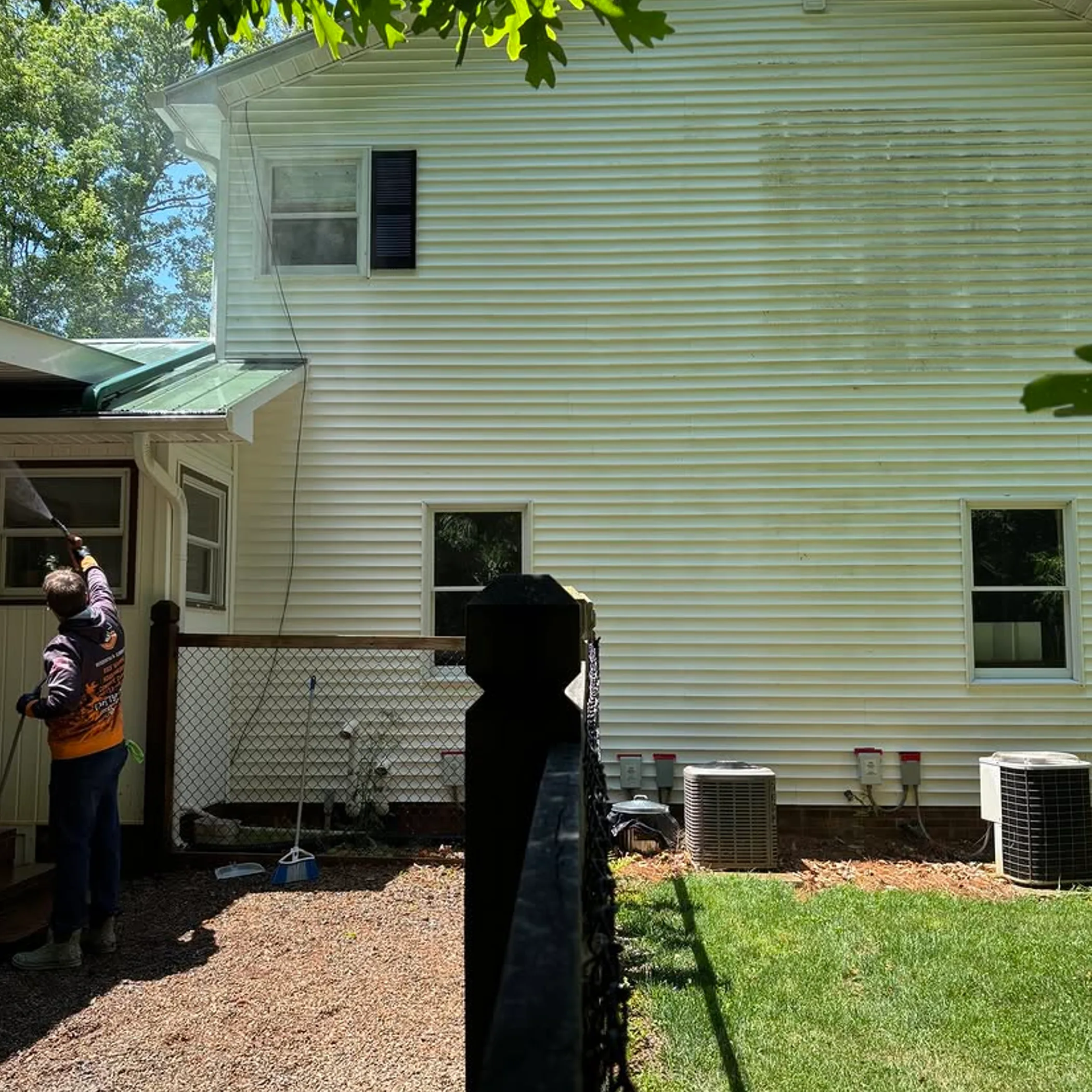
There is cost to consider when you put DIY next to what a professional would do, but the risk of a botched repair is just as much a factor. A wash that is cheap on paper will not stay so once it has stripped some paint, voided a coating or let the ceiling cavity flood.
Soft wash prices in Australia are hard to pin down; they are site specific and depend on the region, the size of the roof, access, what the surface is and how much growth there is. You will find that a thorough external house wash or rendered walls come at a premium over a quick job on the driveway owing to the greater use of chemicals, set up and risk involved.
What To Put In A Quote
Find out what method is to be applied to every surface. Is sodium hypochlorite part of the treatment? Will your plants and runoff be given due protection? Are the pavers to be resanded, and does the quote cover solar panels or not? Then there is the matter of insurance, any limits on access and if the finish is something that improves with time or is done in one go.
Homeowners are wont to put operators like Jims Cleaning, HomeKeep, Water Attack, Mr Blastit, Washlord, DW Services, Washrite, SwanWindowsWA and Leigh’s Window Cleaning side by side. The names mean little compared to the answers you get. An operator worth his salt will put forward a different method for concrete than he would for Colorbond.
When To Call In A Pro
Hire one if you have to deal with mould or lichen in abundance, a roof higher than single-storey, sensitive drainage, awkward access, terracotta tiles that are prone to breaking or solar panels. If after this you are still typing soft washer near me australia into the search bar, you have your answer.
A DIY Plan Without Regrets
For light cleaning of a wall or low-risk ground surfaces you can do it yourself so long as you know your limitations. But leave the heroic stunts in thongs with a machine you have borrowed and only half read the label on to someone else.
Should you be of mind to do the work, make of it a sensible weekend undertaking rather than something you rush through between Bunnings and a tinnie.
- Start with an inspection of the surface for any electrical hazards, damage to the roof, loose paint or cracks in the mortar.
- Your material should dictate the method: soft wash for anything delicate or with biological growth, pressure wash for hard surfaces that can take it.
- Put in the time to shield pets, vehicles, furniture and power points.
- On a small patch out of sight run a test with the mildest mix or setting that will do.
- Do your work in sections and out of the full sun so the solution does not dry up.
- Contain the chemical wash off and do not let it run straight to stormwater.
- Be realistic about timing. Pre-treatment and edging will see a suburban driveway take a few hours once you have factored in the set up and making good afterwards.
As for a roof or the whole exterior, do not expect to be done in a morning if the weather is up and down or the access is fiddly.
Frequently Asked Questions
One is bound to ask these questions, generally after being told to “just blast it”. One might as well do so now before the render is sanded.
Is a house better off with soft washing than the pressure kind?
In most cases yes. Soft washing will get at the grime, algae and mould and there is less chance of damaging the roof coatings, render or weatherboard. Pressure washing is for the ground, not the shell of the house.
After a soft wash does the roof get rinsed?
It depends. Some systems are rinsed, some are left to dwell and let the weathering see it through. It is a question of product instructions, the strength of the treatment and what vegetation is about.
Is the money well spent on a soft wash?
Where organic staining is the problem, it is. Being as it eradicates the organisms responsible it will outlast a water only clean and is more value for money on painted exteriors and roofs where a pressure washer could do expensive harm.
Does one need a pressure washer for the job?
No, the method is all in the application of the right solutions at low pressure. Some will use a pump for it rather than the output of a standard washer.
The safest course with solar panels and roof fixtures
There is no safer course of action than a specialist low-pressure clean. One does not want to risk the kind of damage that can befall roof penetrations, brackets, seals or solar panels from undue pressure or rough treatment; where there are panels it is prudent to be circumspect.
Harper’s view on the matter
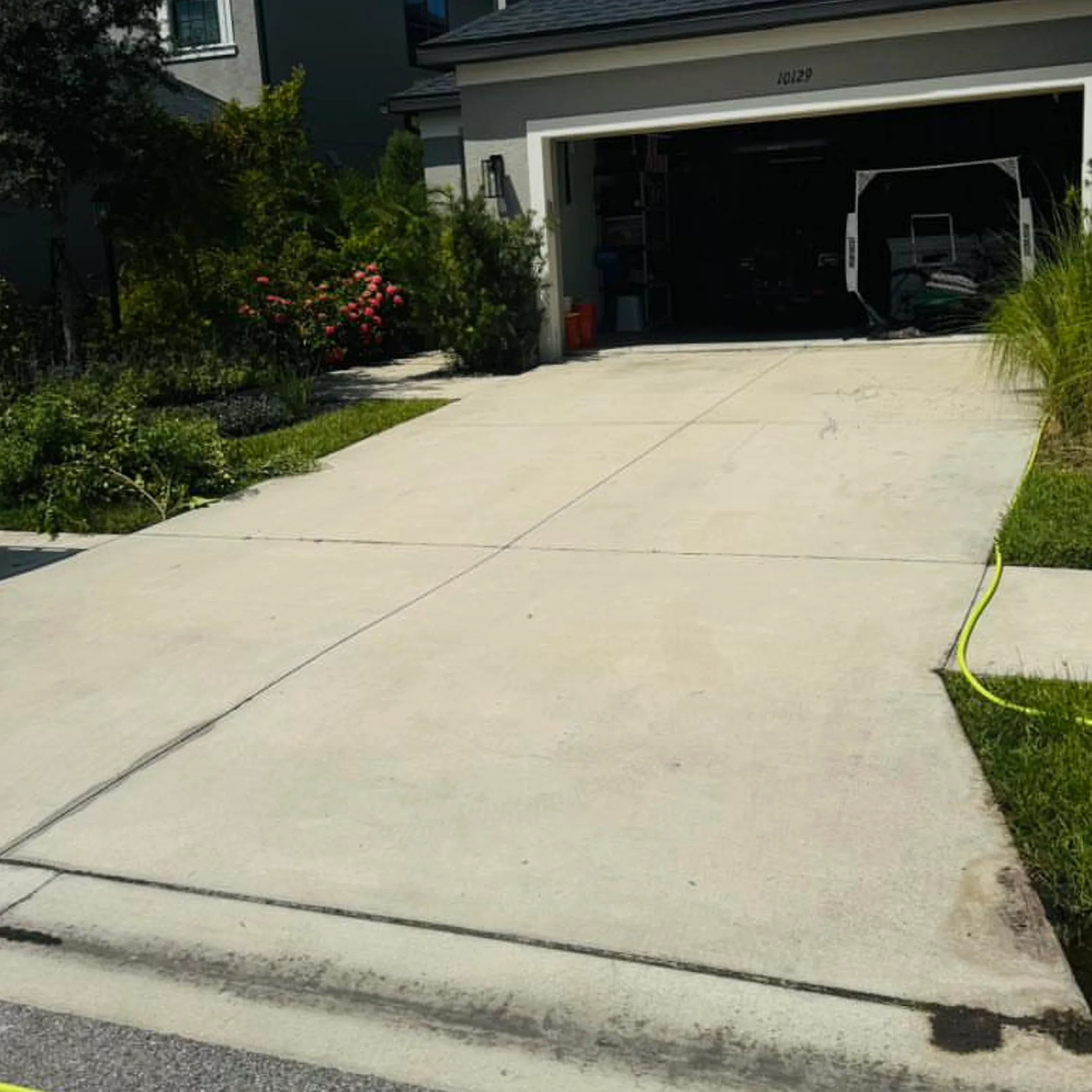
Put it this way: for the home proper soft washing is typically what you want, and for the hard ground in its vicinity pressure washing will do. It is the simplest way to put it when considering the soft wash versus pressure wash debate in australia.
When it comes to weatherboard, render, a roof or any surface with a coating or of a delicate nature, a more gentle approach is generally called for. But on a concrete driveway or with brick and pavers of a sturdier make, there is a role for pressure. The point is to have a surface that is clean and yet unscathed. After all, one would not want the house to look as though it has made it through the Gibb River Road in the middle of a storm, but rather to be left looking of a piece fresher at the end of the day.